Welcome back to the blog, everyone! Today, we’re talking gaming, but not just playing. We’ll be going into the whole kit and kaboodle of cloud gaming and discussing how 5G is playing an important role. If you’re not a gamer and don’t care, feel free to move on to another post, but we love talking about games and playing them, so we thought this topic might be of some interest.
If you’re ready, grab a mouse and get to scrolling! Short on time, there’s a quick summary at the end. We’ve got you.
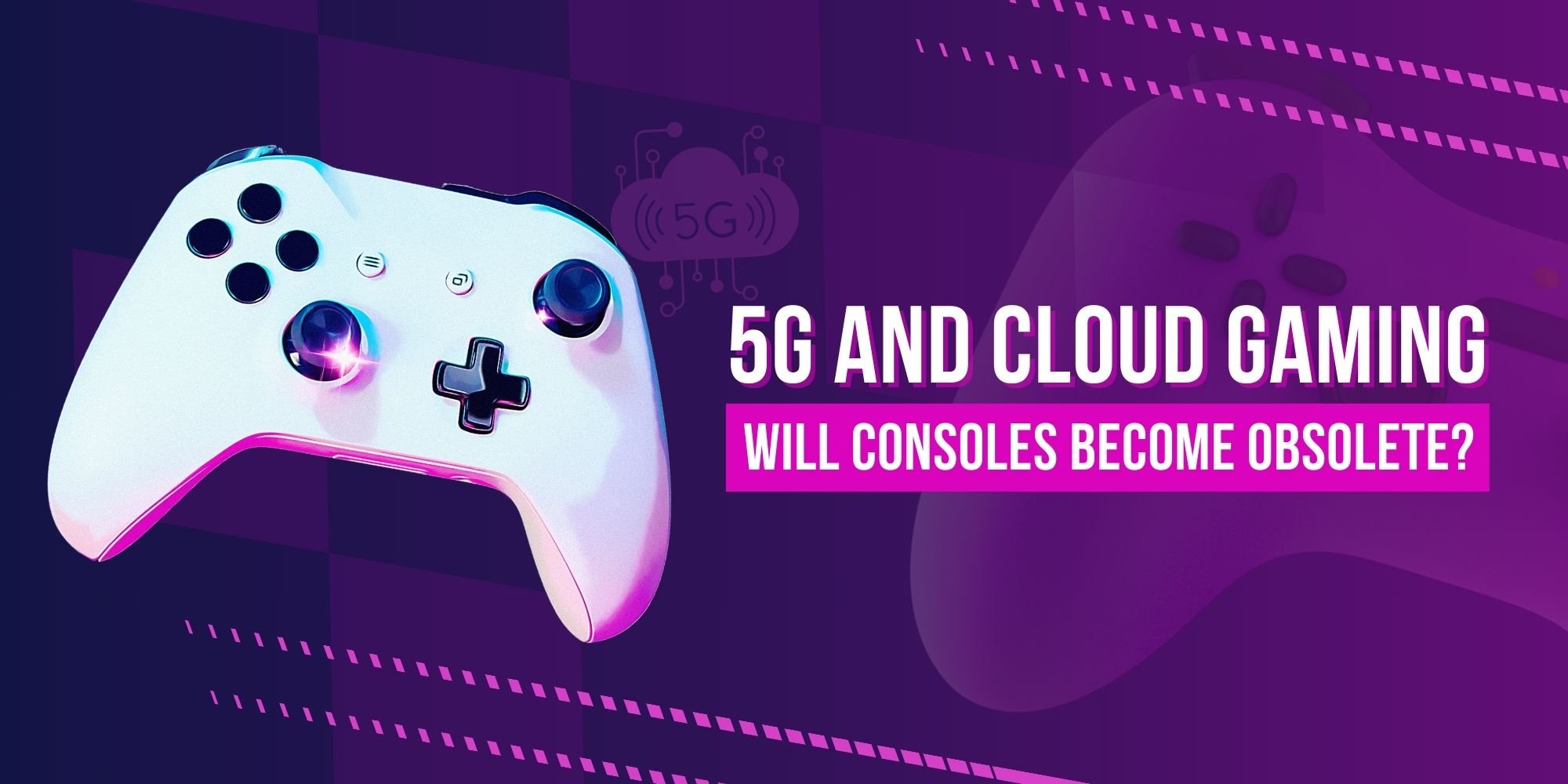
The gaming industry is on the brink of a significant transformation. With the advent of 5G technology and rapid advancements in cloud computing, cloud gaming has emerged as a powerful challenger to traditional gaming consoles. But we have to ask ourselves: Will these innovations truly render consoles obsolete, or will dedicated hardware remain essential for gamers?
Cloud gaming lets players to stream games directly from data centers without the need for expensive gaming consoles or powerful computers at home. This technology, while not entirely new, has recently accelerated thanks to the ultra-fast connectivity and minimal latency offered by 5G networks. Gamers can now access high-quality, graphically intense games on virtually any device: smartphones, tablets, laptops, or even smart TVs. We play a lot of games on our phones and tablets, and we’re betting you do, too. It was interesting to find a console that didn’t take physical games and could only be played via cloud purchases in the newest Xbox.
One of the most compelling advantages of cloud gaming is that accessibility we just mentioned. Consoles and gaming PCs often represent a substantial upfront investment, limiting access to high-quality gaming experiences for many. In contrast, cloud gaming platforms such as Microsoft’s Xbox Cloud Gaming, which stores everything except your game stats in the cloud; NVIDIA GeForce NOW, and Sony’s PlayStation Plus Cloud Streaming allow gamers to play the latest titles at a fraction of the cost, often through affordable subscription models.
The role of 5G in this transition is critical. Historically, cloud gaming has been hindered by latency issues (delays between player inputs and on-screen responses) that significantly degrade gaming experiences, particularly for fast-paced or competitive titles. 5G technology dramatically reduces latency and increases bandwidth, enabling near-instantaneous data transfer between gamers and remote servers. This capability makes streaming even graphically intensive, multiplayer, and real-time competitive games feasible on mobile and portable devices when it works. When introduction of fiber-optic networks worldwide is in place, it will outpace 5G by leaps and bounds, eliminating lag and outage altogether, but that’s still too many years away to think about. Back to the program!
As 5G networks become increasingly widespread, and infrastructure investments continue to surge, the reach and reliability of cloud gaming will continue improving. Companies like Google, Microsoft, and Amazon are investing heavily in infrastructure designed explicitly for cloud gaming, recognizing its potential to reshape the gaming landscape. Google’s Stadia, despite initial setbacks, demonstrated the technological viability of fully cloud-based gaming platforms, while Amazon’s Luna platform continues expanding its library and accessibility.
Despite these advancements, the demise of traditional consoles is far from certain. Gaming consoles like PlayStation, Xbox, and Nintendo Switch have cultivated passionate user communities and exclusive game ecosystems that significantly enhance their value beyond hardware capabilities. Gamers often form strong attachments to exclusive franchises, physical game collections, and even the console itself as a social and entertainment hub. Consoles also offer reliable, consistent performance and a tactile gaming experience that many gamers prefer, and you don’t want to get between a passionate PlayStation user and a passionate Xbox user. Trust.
Technological constraints still exist though. Even with the rollout of 5G, network stability and access remain inconsistent globally. Like a lot of us, many gamers in rural or less-developed regions may not yet enjoy the necessary infrastructure to make cloud gaming viable. Until network coverage and reliability become universally consistent, dedicated gaming hardware will retain its appeal.
Another critical factor preserving consoles’ relevance is game development itself. Developers optimize games specifically for console hardware, achieving peak performance and graphical fidelity unmatched by generic cloud streaming setups. This level of optimization ensures consoles will remain attractive to gamers seeking the best possible performance, particularly enthusiasts who prioritize graphical quality, smooth gameplay, and seamless integration with high-end audiovisual setups like VR.
All that being said, the hybrid future is highly likely and is what many companies are already doing, blending cloud gaming with console technology. Platforms like Xbox Game Pass Ultimate offer cloud streaming alongside traditional console downloads, providing the best of both worlds to gamers. Consoles themselves may evolve into hybrid devices capable of both local gaming and seamless cloud streaming, enhancing flexibility and accessibility.
TL;DR – While 5G and cloud gaming undeniably pose a significant challenge to traditional gaming consoles, it’s premature to declare consoles obsolete. Instead, we’re likely entering a new era of coexistence and integration, where cloud gaming complements rather than replaces console experiences. This evolution will broaden the gaming market, making high-quality experiences accessible to more people while preserving the high-performance, optimized gaming experience many console enthusiasts like us cherish.
We hope you enjoyed this post! Thanks so much for reading and the time out of your day that you’ve given us. While you’re here, if you have a few more minutes to spare, why not check out some of our other posts? We talk about everything from tech to office work. You can find them here. See you next time!
Contributor