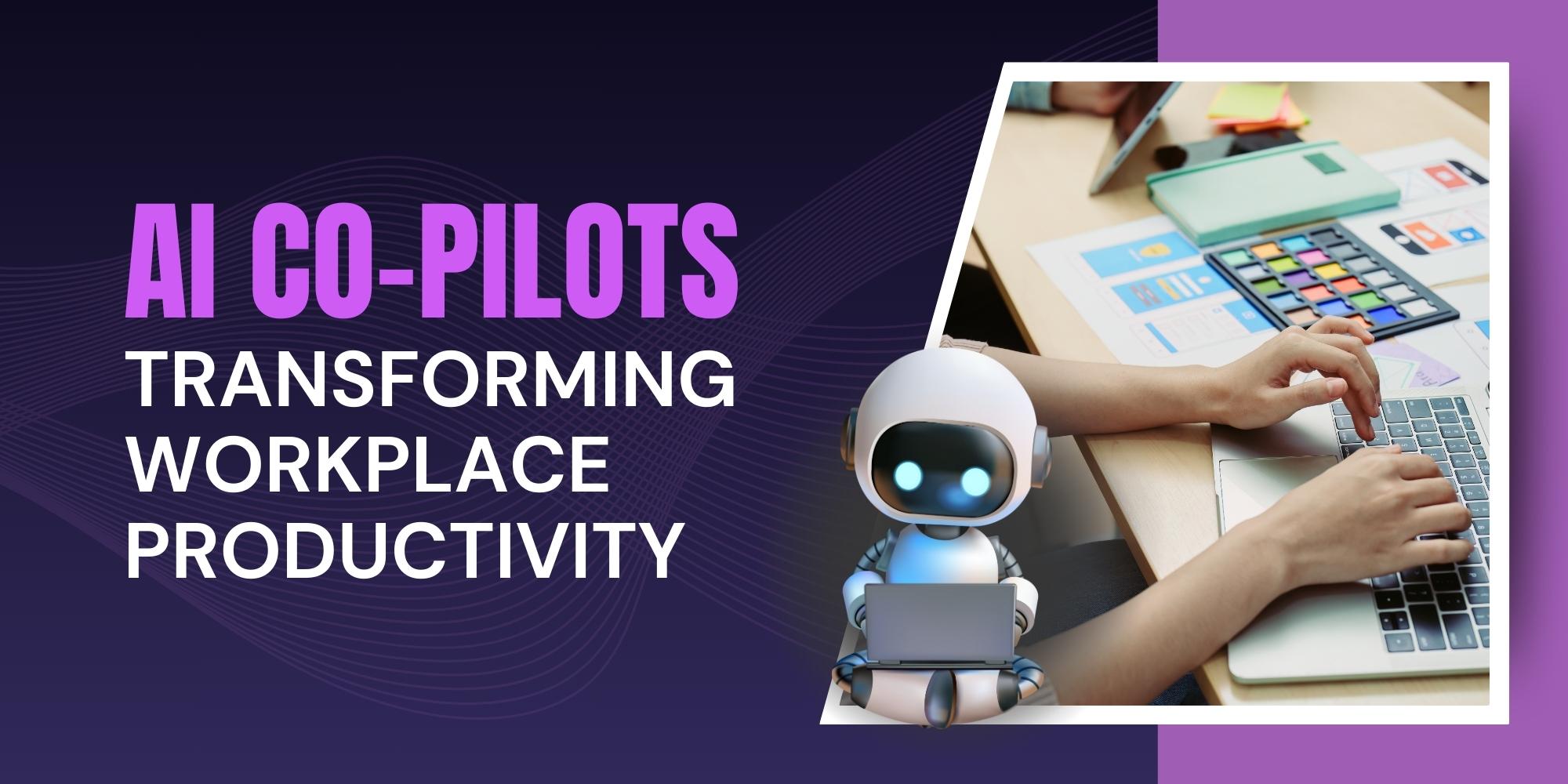
Welcome back, everyone! Grab your favorite drink and get cozy. This week, we’re diving into a topic that’s revolutionizing how we work: AI Co-Pilots. Whether you’re managing projects, leading teams, or simply aiming to enhance your daily efficiency, AI assistants are becoming indispensable allies in the modern workplace.
You’ve likely encountered terms like “AI Co-Pilot” in tools such as Microsoft’s Copilot or Salesforce’s Einstein Copilot. But what exactly are these AI assistants, and how are they reshaping our professional lives?
In this blog, we’ll explore the essence of AI Co-Pilots, their impact on workplace productivity, and real-world applications that highlight their transformative potential.
Short on time? There’s a quick summary at the end!
What is an AI Co-Pilot?
An AI Co-Pilot is an intelligent assistant integrated into your work tools, designed to enhance your productivity by automating tasks, providing insights, and facilitating decision-making. Unlike traditional automation that follows predefined rules, AI Co-Pilots leverage advanced technologies like machine learning and natural language processing to understand context, learn from user interactions, and offer real-time support.
For instance, Microsoft’s Copilot integrates with tools like Excel and PowerPoint, assisting users by automating data analysis and content creation. Similarly, Salesforce’s Einstein Copilot is embedded across Salesforce applications, providing conversational AI assistance to answer questions, generate content, and automate actions, all grounded in secure company data.
How AI Co-Pilots Enhance Productivity
AI Co-Pilots are not just about automation; they’re about augmentation. They enhance human capabilities by:
- Automating Repetitive Tasks: By handling routine activities such as scheduling meetings, generating reports, or managing emails, AI Co-Pilots free up time for more strategic work.
- Providing Data-Driven Insights: These assistants analyze vast amounts of data to offer recommendations, helping in making informed decisions quickly.
- Facilitating Natural Language Interactions: Users can interact with AI Co-Pilots using everyday language, making technology more accessible and reducing the learning curve.
- Enhancing Collaboration: AI Co-Pilots can summarize discussions, suggest action items, and even draft communications, streamlining teamwork and communication.
Real-World Applications
Consider a marketing team utilizing an AI Co-Pilot to analyze campaign performance. The assistant could automatically generate reports highlighting key metrics, suggest areas for improvement, and even draft content for future campaigns based on past successes.
In customer service, an AI Co-Pilot integrated into a CRM system like Salesforce can provide representatives with real-time information about customers, suggest responses, and automate follow-up tasks, leading to improved customer satisfaction and efficiency.
Should You Integrate an AI Co-Pilot into Your Workflow?
Consider adopting AI Co-Pilots if:
- You aim to reduce time spent on repetitive tasks.
- Your work involves analyzing large datasets for decision-making.
- You seek to enhance collaboration and communication within your team.
- You’re already using platforms that offer AI Co-Pilot integrations, such as Microsoft 365 or Salesforce.
Proceed with caution if:
- Your industry has strict compliance and data privacy regulations.
- Your team lacks familiarity with AI tools and requires training.
- Your current workflows are heavily manual and would need significant restructuring to integrate AI solutions.
TL;DR: AI Co-Pilots are intelligent assistants embedded in work tools, designed to automate tasks, provide insights, and enhance decision-making. By integrating AI Co-Pilots into your workflow, you can boost productivity, improve collaboration, and focus on strategic initiatives. As these tools become more prevalent, assessing their fit for your specific needs and preparing your team for their adoption will be key to leveraging their full potential.
Hope you enjoyed this post! While you’re here, why not check out a few of our other pieces? We have several blog posts on HR, Cloud Technologies, Salesforce CRM, AI, Salesforce CPQ, Zoho, GreenTech Bitcoin, Cybersecurity, AWS, and many other topics we just know you’ll love. Browse the topics here!
Contributor