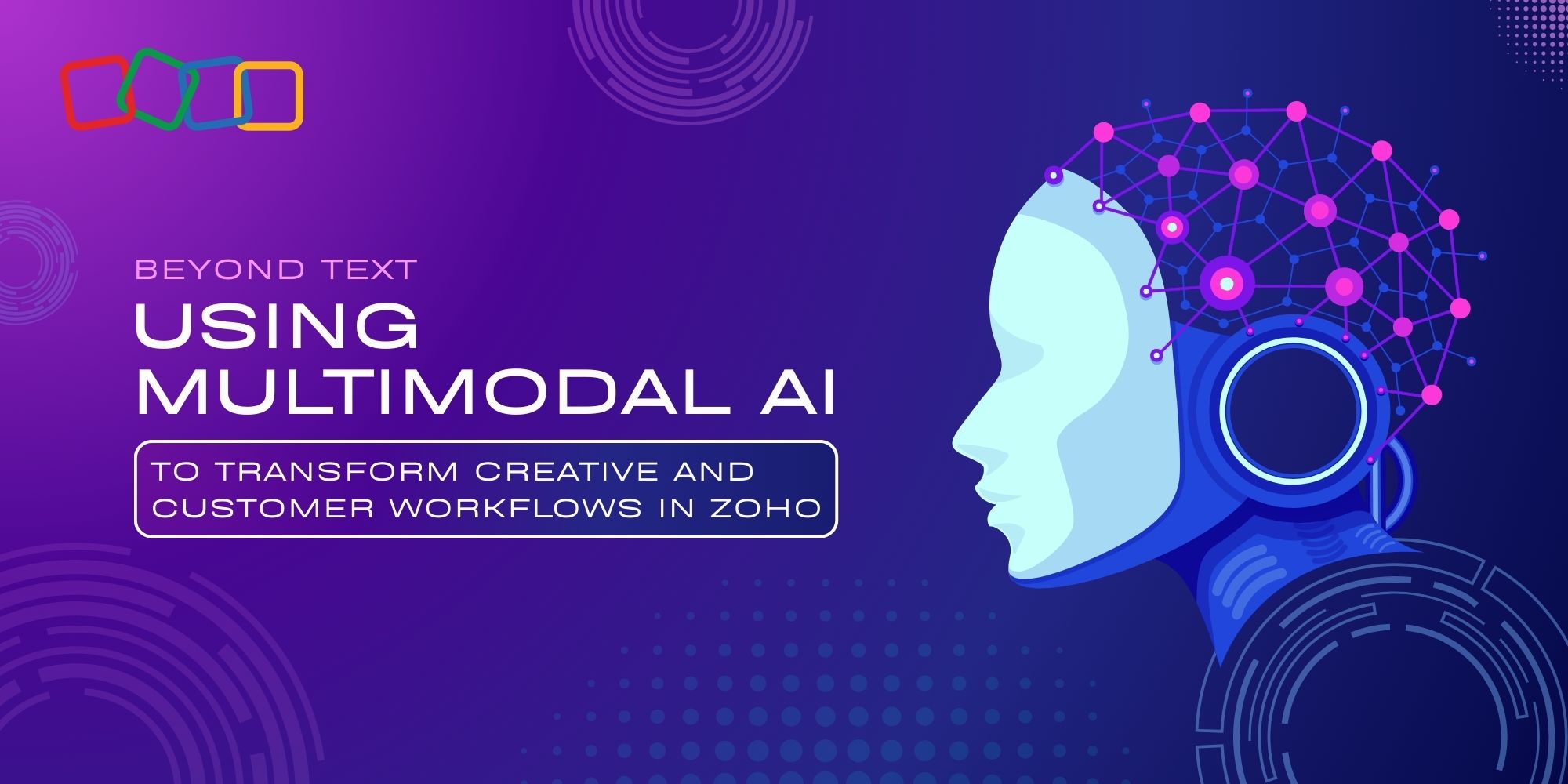
Welcome back, everyone! Grab your coffee, tea, or favorite drink and get comfortable. Today we’re talking about how multimodal AI is reshaping the way businesses use Zoho. From customer support to creative content, the move beyond text into voice, image, and video is transforming workflows in ways we couldn’t have imagined a few years ago.
If you’re short on time, check out the TL;DR at the end!
What Is Multimodal AI in Zoho?
Multimodal AI refers to AI systems that understand and generate across multiple formats text, images, audio, and even video. In Zoho, this means going far beyond traditional chatbots or predictive analytics. Instead, businesses can:
- Analyze customer conversations across email, chat, and voice
- Generate creative assets like marketing copy and visuals
- Offer real-time support through text-to-speech or voice recognition
- Create richer dashboards by blending written, visual, and spoken data
Multimodal AI isn’t just about input variety, it’s about creating smarter, context-rich workflows that mirror the way humans communicate.
Why Multimodal AI Matters for Businesses Using Zoho
- Improved Customer Support
Multimodal AI enables voice-based assistance, image recognition for troubleshooting, and text-based follow-ups delivering a seamless omnichannel experience. - Faster Creative Workflows
Teams can generate content, graphics, and campaign ideas with a blend of text and visual AI, cutting turnaround times dramatically. - Deeper Insights
By analyzing not only what customers write but also how they speak or what they share visually, businesses gain a 360° view of sentiment and intent. - Enhanced Accessibility
Voice-to-text and image-based interfaces make Zoho tools more inclusive for users with diverse needs. - Smarter Automation
Multimodal triggers like a customer uploading an image of a product issue can launch automated workflows that go beyond simple text commands.
Challenges Businesses Need to Consider
Of course, moving beyond text isn’t without its hurdles:
- Data Complexity: Integrating and processing multiple formats requires more robust infrastructure.
- Privacy Concerns: Handling voice recordings, images, and other personal data must align with strong compliance standards.
- Bias & Fairness: AI trained on unbalanced visual or audio data can lead to skewed results.
- Adoption Curve: Teams may need training to fully leverage multimodal capabilities in their daily workflows.
A Glimpse of What’s Coming Next
As Zoho continues to expand its AI capabilities, multimodal functions will feel less like add-ons and more like core features. Businesses can expect:
- Unified dashboards where text, voice, and visuals flow together seamlessly
- AI assistants capable of handling complex, multi-format interactions with customers
- Creative suites where design, copy, and media generation are fully integrated
- Smarter collaboration tools that bring teams together across formats and contexts
These trends suggest a future where multimodal AI is not a luxury but a necessity the natural way we’ll expect to interact with technology.
TL;DR: Zoho’s shift into multimodal AI is transforming both creative and customer workflows. By combining text, voice, image, and video, businesses gain richer insights, faster automation, and more inclusive user experiences. Challenges like data privacy, bias, and adoption remain, but the opportunities far outweigh the risks. The path ahead points to AI that feels seamless, natural, and central to how we work.
Hope you enjoyed this post! While you’re here, why not check out some of our other blogs? We’ve got insights on Cloud Technologies, Salesforce CRM, AI, Zoho, Cybersecurity, AWS, and more all designed to keep you ahead in a fast-changing digital world.
Contributor