Welcome to the blog, folks! In today’s post, we’ll explore what autonomous AI agents are, how they’re evolving from assistants into decision-makers, and what that means for business operations across customer support, finance, and IT. Ready? Get comfy, warm up that scrolling finger, and let’s get right into it!
Artificial intelligence has officially moved beyond the “helpful assistant” phase.
For years, businesses have used AI to answer basic questions, surface insights, or automate repetitive tasks. Think chatbots, forecasting tools, or recommendation engines. Useful? Absolutely. Transformational? Not quite.
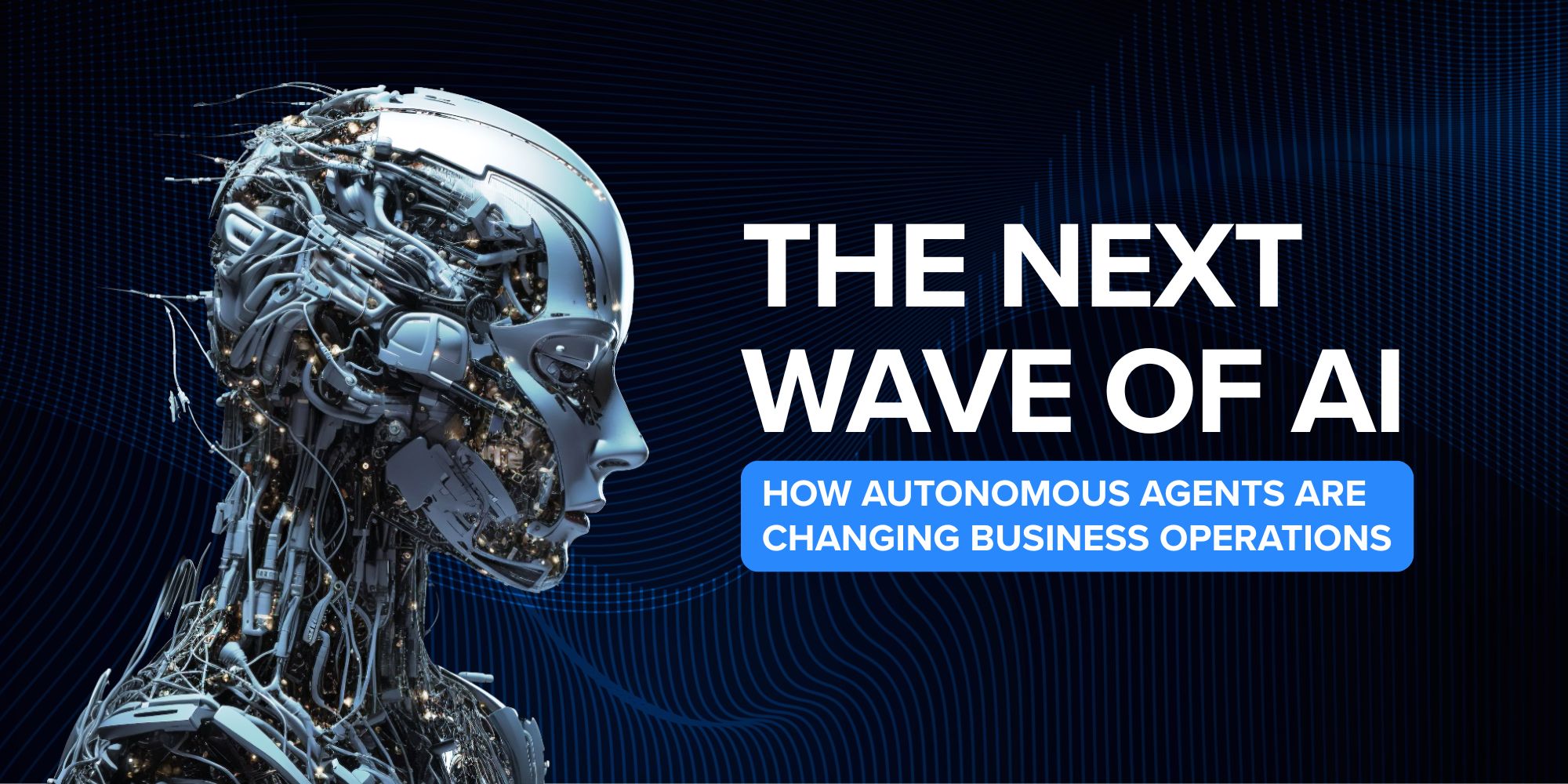
Now we’re entering the next wave of AI—one where autonomous agents don’t just assist humans, but actively make decisions, take action, and adapt in real time. These agents can monitor systems, interpret data, execute workflows, and even collaborate with other agents to achieve defined goals.
Welcome to the era of AI as an operator—not just a tool.
From AI Assistants to Autonomous Agents
Traditional AI assistants are reactive. They wait for input, respond to prompts, and complete narrowly defined tasks. While powerful, they still rely heavily on human direction.
Autonomous AI agents, on the other hand, are goal-oriented. Once given an objective—reduce ticket backlog, prevent system downtime, improve cash flow—they can determine how to achieve it. They analyze data, make decisions, take actions, and adjust their approach as conditions change.
Key characteristics of autonomous agents include:
- Decision-making capability based on real-time data
- Action execution without constant human intervention
- Learning and adaptation over time
- Collaboration with other systems, tools, or agents
This shift changes AI’s role from “helper” to “digital teammate.”
Customer Support: Faster Resolutions, Smarter Experiences
Customer support is one of the first areas where autonomous agents are making a measurable impact.
Most companies already use AI chatbots to answer FAQs or route tickets. Autonomous agents take this much further.
Instead of simply responding to customer messages, an AI agent can:
- Analyze the customer’s history, sentiment, and urgency
- Decide whether the issue can be resolved automatically or requires escalation
- Execute actions such as issuing refunds, resetting accounts, or updating records
- Monitor unresolved issues and follow up proactively
For example, an autonomous agent could detect a surge in support tickets related to a recent software update. It might then flag the issue, notify engineering, draft a customer-facing update, and temporarily adjust routing rules to prioritize affected users—all without waiting for human intervention.
The result? Faster resolution times, lower support costs, and more consistent customer experiences.
Just as importantly, human support teams are freed up to focus on complex, high-empathy interactions where they add the most value.
Finance: Real-Time Decisions, Not Just Reports
Finance teams have long relied on AI for forecasting, anomaly detection, and reporting. Autonomous agents move finance from insight generation to action execution.
Instead of producing dashboards that humans must interpret, AI agents can:
- Monitor cash flow and spending patterns continuously
- Detect anomalies or risks in real time
- Decide when to adjust budgets, delay payments, or accelerate collections
- Execute approved actions within defined guardrails
Imagine an AI agent that notices a recurring vendor cost increasing beyond historical norms. Rather than simply flagging it, the agent could analyze contract terms, recommend renegotiation, and initiate an approval workflow—all while documenting its reasoning.
In accounts receivable, autonomous agents can prioritize outreach, tailor messaging based on customer behavior, and adjust strategies dynamically to improve collection rates.
Finance leaders still set strategy and oversight—but day-to-day decisions happen faster, with far less manual effort.
IT Operations: Self-Healing Systems Become Reality
IT operations may be where autonomous agents shine brightest.
Modern IT environments are complex, distributed, and always on. Human teams simply can’t monitor everything at all times. Autonomous AI agents are stepping in to fill that gap.
In IT, autonomous agents can:
- Continuously monitor infrastructure, applications, and performance metrics
- Detect anomalies or early signs of failure
- Determine root causes using historical and contextual data
- Take corrective action—such as restarting services, reallocating resources, or rolling back changes
Instead of waiting for an outage to trigger alerts, AI agents can act preventively. For example, if system load patterns indicate a likely failure within the next hour, the agent can scale resources automatically or reroute traffic before users are impacted.
This moves IT from a reactive model to a proactive, self-healing approach, reducing downtime and operational stress.
What This Means for Business Leaders
The rise of autonomous AI agents isn’t about replacing people—it’s about redefining how work gets done.
As agents take on operational decision-making, human teams can focus on:
- Strategy and innovation
- Oversight and governance
- Complex problem-solving
- Relationship-driven work
That said, autonomy doesn’t mean a lack of control. Successful implementations include:
- Clear objectives and boundaries for agents
- Human-in-the-loop checkpoints where appropriate
- Transparent decision logic for auditability and trust
- Strong data foundations to ensure reliable outcomes
Businesses that treat autonomous agents as strategic assets—not experimental tools—will be better positioned to scale efficiently and adapt quickly.
Preparing for the Next Wave of AI
Autonomous agents are no longer theoretical. They’re already reshaping operations across industries, and their capabilities are evolving fast.
To prepare, organizations should start by asking:
- Which operational decisions are repetitive, data-driven, and time-sensitive?
- Where do delays or bottlenecks hurt customers or internal teams most?
- How well integrated are our systems and data today?
The answers often reveal clear opportunities for AI-driven autonomy.
The next wave of AI is about action, not just intelligence.
As autonomous agents evolve from assistants into decision-makers, businesses gain the ability to operate faster, smarter, and with greater resilience. Customer support becomes proactive, finance becomes real-time, and IT becomes self-healing.
Organizations that embrace this shift thoughtfully—balancing autonomy with governance—will set themselves apart in an increasingly automated world.
The future of business operations isn’t just AI-powered.
It’s AI-driven.
Well, that’s all for today, folks! We hope you enjoyed this post, and we also ask that you stick around to read more. We have posts on a range of topics. You can find them here. Until next time!
Contributor