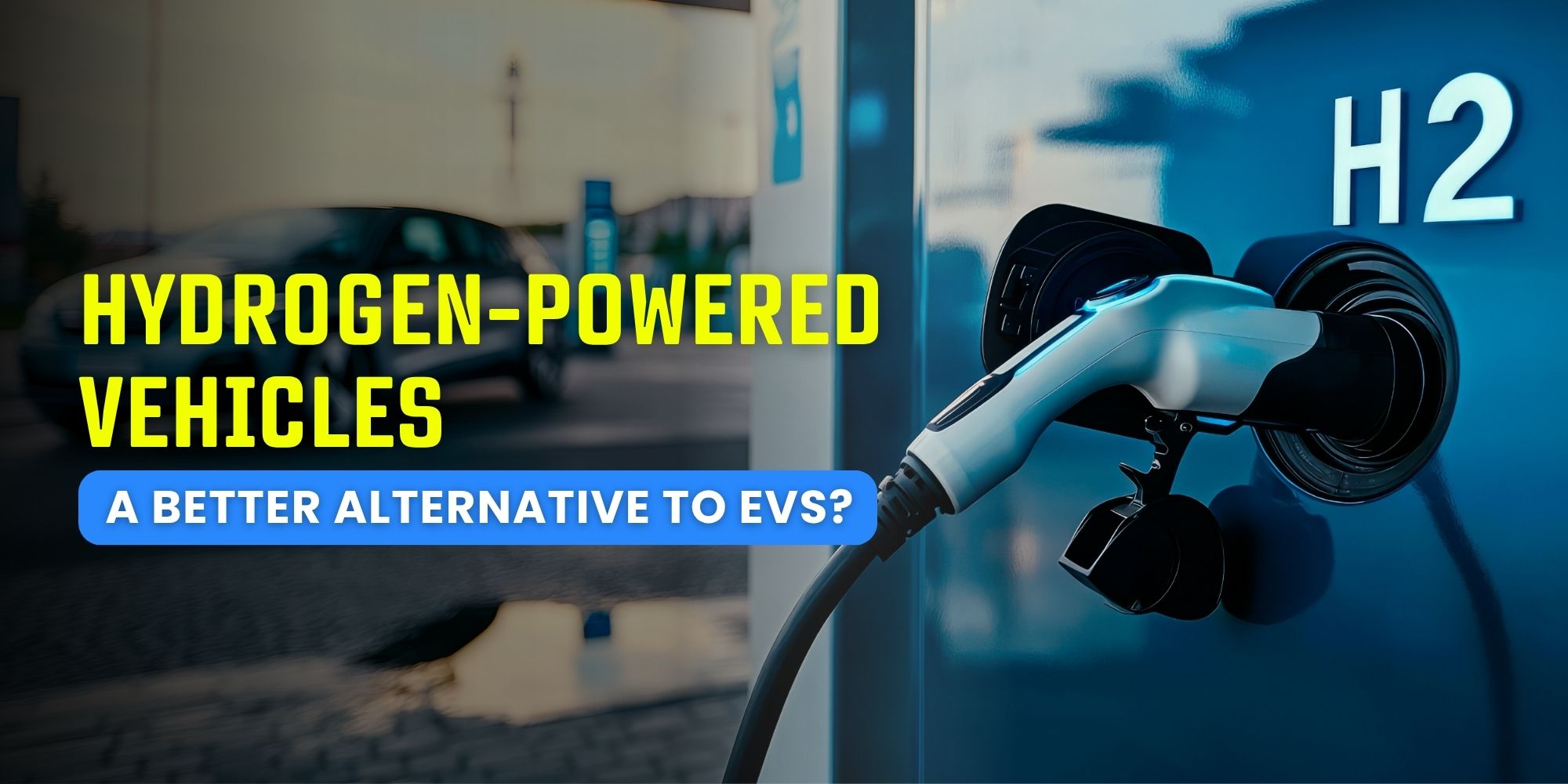
Helloooooo, everyone, and welcome back! Today, we have an exciting topic for you all to try and wrap your head around. Do you have an EV? Would you like a better alternative? We do, and we would! No more charging for long periods of time—with hydrogen, you’ll be able to fill up in the time it takes to pump gas. How’s that for innovation? Ready? Get comfy, get your mouse finger warmed up and ready to scroll, and let’s get to it.
Electric vehicles (EVs) have dominated headlines for the past decade as the future of sustainable transportation. But while lithium-ion batteries power most of the conversation, another contender is quietly gaining momentum: hydrogen fuel cell vehicles. These cars and trucks use hydrogen gas to generate electricity, emitting only water vapor as a byproduct. The question is: could hydrogen-powered vehicles offer a better alternative to EVs?
How Hydrogen Vehicles Work
Hydrogen fuel cell vehicles (FCVs) operate differently from battery EVs. Instead of storing electricity in large batteries, they use a fuel cell to combine hydrogen with oxygen, creating electricity on demand. The process is clean, efficient, and produces zero harmful tailpipe emissions. Unlike traditional EVs, hydrogen-powered cars can be refueled in minutes, much like filling up at a gas station.
The Advantages of Hydrogen
One of the biggest advantages of hydrogen vehicles is refueling time. EV drivers often wait 30 minutes to several hours to recharge, depending on the battery and charger. Hydrogen vehicles can be fueled in less than five minutes, making them far more convenient for long-distance travel.
Hydrogen also offers advantages in energy density. Hydrogen fuel packs more energy per kilogram than batteries, allowing for longer driving ranges without the weight penalty of massive battery packs. This makes FCVs particularly attractive for heavy-duty applications like trucks, buses, and even ships, where batteries may be impractical.
Another potential benefit is resource distribution. Unlike lithium, cobalt, and nickel—minerals heavily concentrated in a few regions—hydrogen can be produced from diverse sources, including water, natural gas, and renewable energy. This could reduce reliance on limited mineral supply chains and enhance energy security.
The Challenges Facing Hydrogen
Despite the promise, hydrogen faces steep challenges. Infrastructure is the most significant. While EV charging stations are multiplying worldwide, hydrogen refueling stations remain scarce, limiting adoption. Building a global hydrogen fueling network requires massive investment and cooperation between governments and private companies.
Production is another challenge. Most hydrogen today is derived from natural gas in a process that emits carbon dioxide, undermining its green credentials. “Green hydrogen,” produced using renewable energy and water through electrolysis, is much cleaner but remains expensive. Scaling production and lowering costs will be critical to making hydrogen competitive.
Safety and perception also play roles. Hydrogen is highly flammable, and while modern systems are designed with strict safety protocols, public perception remains cautious. Overcoming these fears requires education, innovation, and time.
Hydrogen vs. EVs: Complementary or Competitive?
The debate isn’t necessarily about replacing EVs with hydrogen vehicles—it may be about balance. Battery EVs excel in passenger cars, short commutes, and areas with robust charging infrastructure. Hydrogen vehicles shine in long-haul transport, heavy-duty fleets, and scenarios where downtime for charging is impractical.
Some experts suggest that the future of clean transportation will be a mix: EVs for city and suburban driving, hydrogen for commercial and long-range needs. Both technologies address different aspects of the same challenge: reducing greenhouse gas emissions from transportation.
Innovations on the Horizon
Momentum is building. Automakers like Toyota, Hyundai, and Honda have released hydrogen-powered models, while companies such as Nikola and Hyundai are developing hydrogen trucks. Governments are funding hydrogen research and infrastructure projects, especially in Europe and Asia.
Meanwhile, advancements in electrolyzer technology are driving down the cost of green hydrogen production. If renewable-powered hydrogen generation scales successfully, hydrogen fuel could become a mainstream alternative. Pair this with expanding fueling infrastructure, and hydrogen vehicles may become far more practical within the next decade.
What It Means for the Future
Hydrogen-powered vehicles aren’t ready to replace EVs across the board, but they may fill a critical gap that batteries alone can’t address. If production becomes greener and infrastructure improves, hydrogen could become an essential part of a multi-pronged strategy for decarbonizing transportation.
The race to sustainable mobility isn’t a one-size-fits-all solution. EVs may dominate in some markets, hydrogen in others. What’s clear is that the technologies are advancing rapidly, and the future of transportation will likely be a hybrid ecosystem where batteries and fuel cells coexist to deliver cleaner, more efficient ways to move people and goods.
Thank you so much for reading! While you’re hanging around, why not check out some of our other blog posts. We cover a ton of topics from Salesforce to EVs. Take a peek here. We’ll see you next time!
Contributor