Welcome to the blog and one of my favorite topics of all time, y’all! We’re talking about the potential creativity of AI. There will be zero time wasted up here, so let’s just dive right into the gravy, shall we?
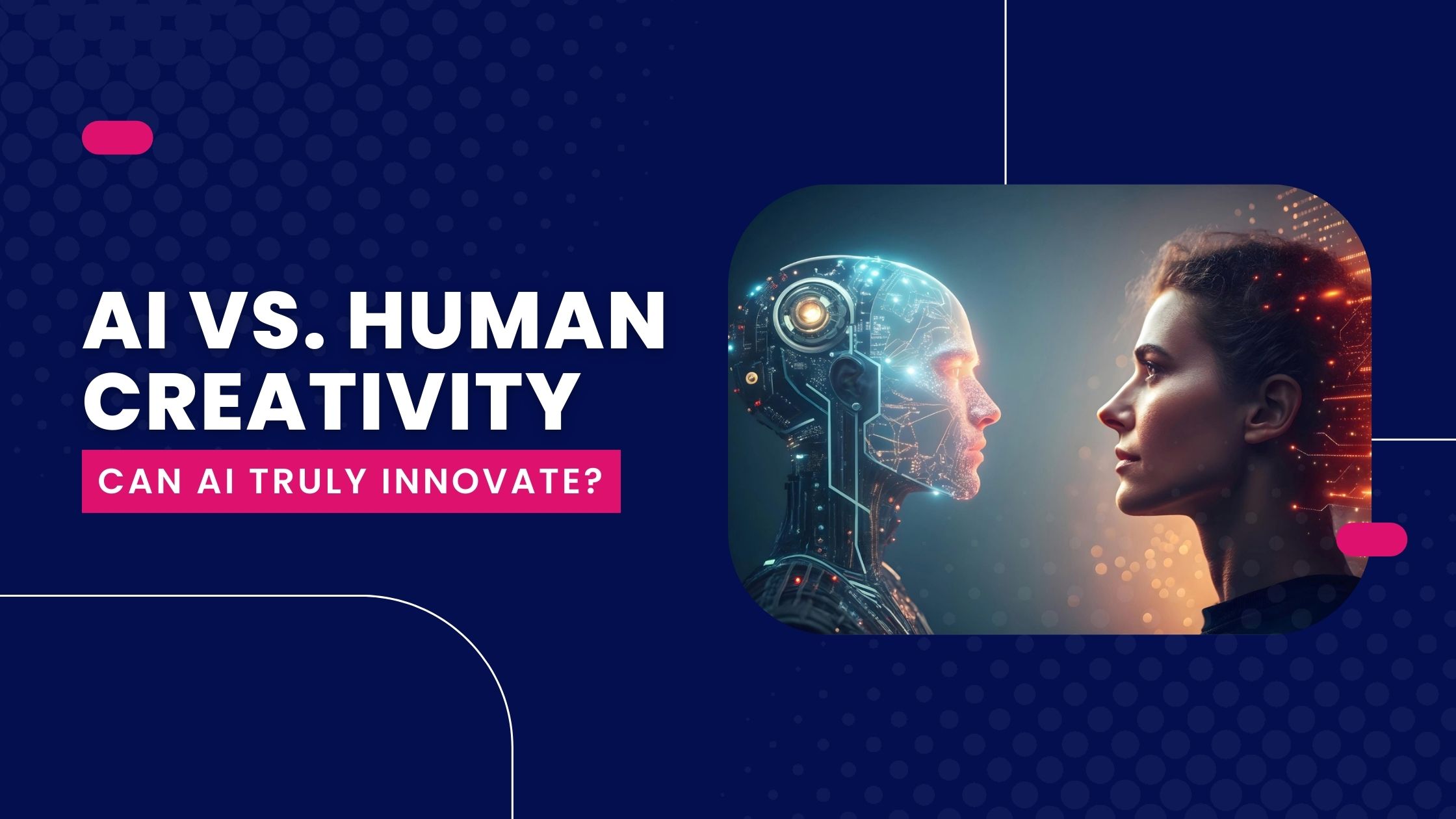
Artificial intelligence has rapidly evolved from a niche technology to a mainstream tool powering industries across the globe. From generating marketing copy to composing music and designing graphics, AI appears to be stepping into creative territory once thought exclusive to humans. But as impressive as AI systems have become, a critical question lingers: can AI truly innovate, or is human creativity still unmatched?
Understanding Human Creativity
Creativity involves more than producing something new—it’s about connecting ideas, emotions, and cultural context in a way that resonates with people. Human creativity is often rooted in lived experiences, personal struggles, and imagination that extends beyond what already exists. Innovation is not just the combination of patterns but the leap into the unknown, guided by intuition and meaning. We feel, and AI can’t. Most creative people create from the pain they feel or the emotion they’re experiencing in the moment. This is why true creatives aren’t worried about AI. Machines can’t feel. Period.
How AI Approaches Creativity
AI’s creative abilities are driven by data. Generative AI models are trained on massive datasets of text, images, or music. They identify patterns and recombine them in ways that mimic originality. For example, an AI trained on thousands of paintings can generate artwork that looks stylistically fresh, or a language model can write a story that feels compelling.
However, AI does not “understand” its creations. It cannot experience emotion, cultural nuance, or intent. What looks like innovation is, in fact, an advanced form of pattern recognition and remixing.
Where AI Excels
AI’s strength lies in speed and scale, not originality. It can generate thousands of variations of a design in seconds, suggest novel molecular structures in drug discovery, or brainstorm ideas without fatigue. For many businesses, this accelerates the creative process by offering starting points that humans can refine.
AI also pushes boundaries by venturing into areas humans might overlook. Algorithms can uncover patterns invisible to the human eye or combine concepts from unrelated fields, leading to unexpected solutions. In this way, AI can act as a powerful partner in the creative process.
As I always say: We’re not using AI to it’s proper potential. Because it’s able to spot patterns and provide solutions humans haven’t thought of, it can break down complex medical issues and help us manufacture new drugs to treat things like cancer. That’s where the technology will have the most strength.
The Limits of Machine Innovation
Despite its capabilities, AI faces clear limits. It lacks self-awareness, motivation, and the ability to assign meaning to its output. A poem written by AI might rhyme beautifully, but it won’t carry the same emotional depth as one written from the heart of someone who has lived through joy or grief (the human condition). Similarly, AI-generated business ideas may sound viable but lack the human insight into social dynamics, ethics, and long-term cultural impact.
True innovation often involves breaking away from the known, challenging conventions, and taking risks based on intuition. These are qualities AI does not possess. It can only extrapolate from what it has seen, not imagine something that has never been conceived.
The Best of Both Worlds
Rather than viewing AI as a competitor, many experts see it as a collaborator, which is where it should be. AI can handle repetitive, data-heavy tasks, freeing humans to focus on the aspects of creativity that require empathy, vision, and cultural awareness. Together, AI and humans can co-create in ways that combine machine precision with human depth.
For instance, in the entertainment industry, AI can generate visual effects or draft story outlines, while writers and directors infuse them with character and meaning. In business, AI can analyze trends to propose marketing strategies, but humans decide which messages will genuinely resonate with audiences.
It shouldn’t be replacing humans, even though it works faster and more accurately (in many cases) because it doesn’t have eyes or a heart, and it can’t glean emotion from the things it creates. AI may think it’s a good thing to put something on an ad that ends up offending tens of thousands of people who view it because AI doesn’t understand emotional connection. There should always be human oversight with everything we allow AI to do.
The Road Ahead
As AI continues to advance, the line between human and machine creativity will blur further. Businesses will increasingly rely on AI as a creative partner, but human judgment will remain essential to ensure that innovation is not just new, but also meaningful and unoffensive.
AI can generate content; humans give it purpose. AI can suggest ideas; humans decide which ones matter. The synergy between the two may not only enhance productivity but also push the boundaries of what is possible in art, science, and industry.
In the end, AI may never truly innovate on its own—but by working alongside human imagination, it can help bring about a future where creativity flourishes like never before. So, stop pushing it away or being scared, and learn how to work with it to make your ideas better.
Thank you so much for reading! While you’re hanging around, why not check out some of our other blog posts. We cover a ton of topics from evolution of AI to emerging tech. Take a peek here. See you all next time!
Contributor