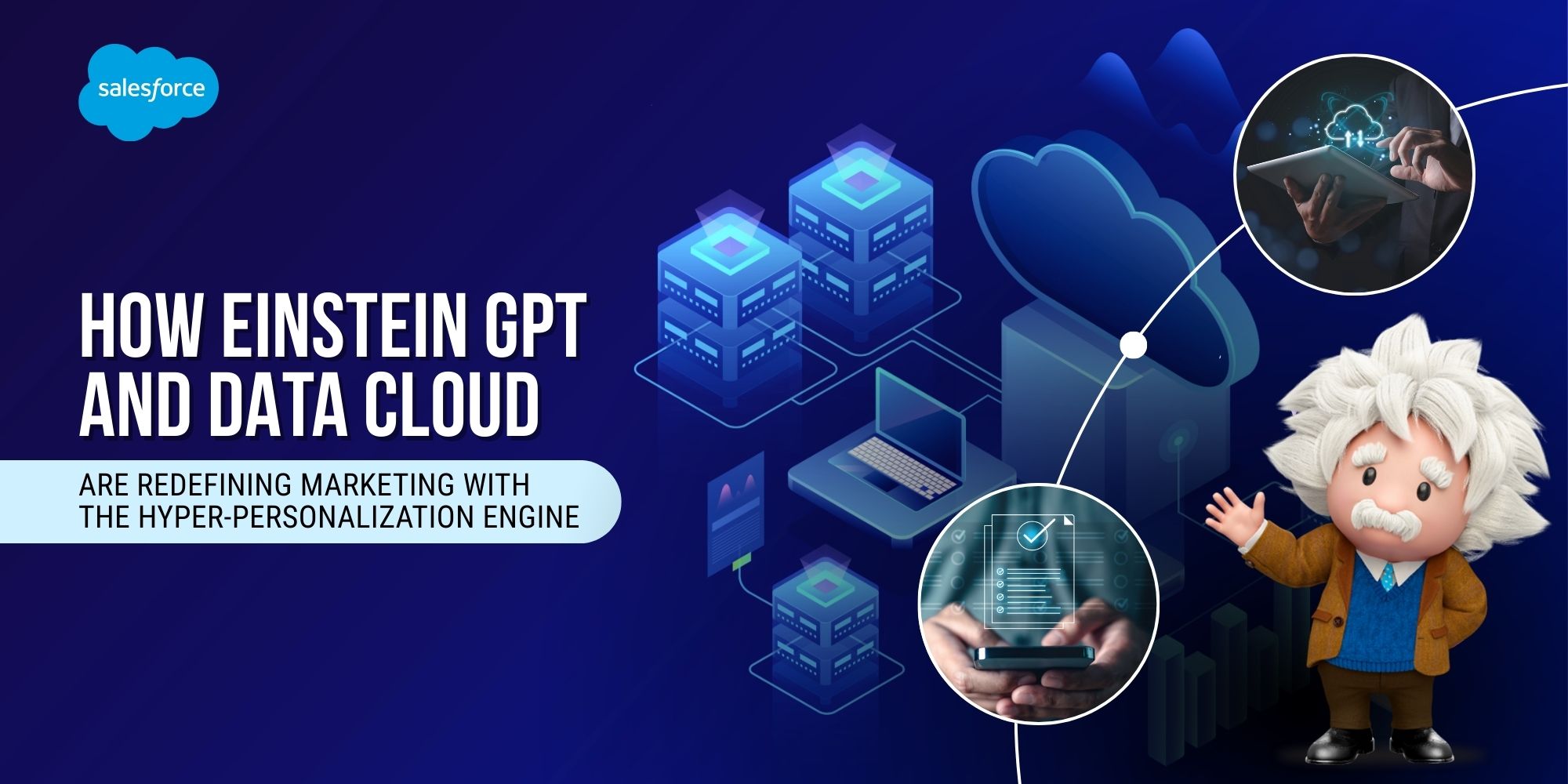
Welcome back, everyone! Grab your favorite drink and get comfortable as we dive into how Salesforce is reshaping the marketing landscape with the combined power of Einstein GPT and Data Cloud. Together, they form a hyper-personalization engine that delivers marketing experiences tailored to each individual customer like never before.
If you’re short on time, check out the TL;DR at the end!
What Is Hyper-Personalization with Salesforce?
Hyper-personalization goes far beyond using a customer’s name in an email. It’s about understanding behaviors, preferences, and context in real time and then delivering the right message through the right channel at exactly the right moment. With Einstein GPT generating natural, relevant content and Data Cloud providing a complete customer view, Salesforce empowers marketers to create meaningful one-to-one experiences at scale.
Why Hyper-Personalization Matters
- Improves customer engagement: Personalized interactions capture attention and encourage customers to connect more deeply with brands.
- Boosts conversion rates: When marketing is timely and relevant, customers are more likely to take action, whether it’s clicking, signing up, or purchasing.
- Strengthens brand loyalty: Customers who feel understood and valued are far more likely to stay loyal and advocate for the brand.
- Reduces marketing waste: Resources are focused only on actions and messages that are most likely to succeed, minimizing irrelevant outreach.
- Creates competitive advantage: Brands that adopt hyper-personalization stand out in crowded markets by offering experiences that feel unique and authentic.
Challenges in Delivering Hyper-Personalization
Even with powerful tools like Einstein GPT and Data Cloud, businesses face challenges. Data privacy and compliance must remain top priorities as marketers handle sensitive customer information. Accuracy of insights depends on the quality and diversity of the data collected. There’s also the challenge of balancing automation with the human touch, ensuring personalization feels genuine rather than mechanical.
How Salesforce Is Making It Possible
Salesforce addresses these challenges by offering built-in privacy and governance controls in Data Cloud, giving marketers confidence that customer data is secure. Einstein GPT generates content that aligns with brand voice and customer needs, while real-time analytics provide transparency into what’s working and why. Together, they allow businesses to execute personalization strategies that are both powerful and responsible.
The Future of Personalized Marketing
Looking ahead, hyper-personalization will become a standard expectation rather than a differentiator. Customers will anticipate experiences that adapt to their preferences seamlessly across channels, from email and chat to voice and social. With Salesforce continuously innovating in AI and data unification, marketers can prepare for a future where personalization is not just deeper but also more transparent, inclusive, and ethical.
TL;DR: Salesforce is redefining marketing with Einstein GPT and Data Cloud, creating a hyper-personalization engine that delivers one-to-one customer experiences at scale. Benefits include stronger engagement, higher conversions, and greater loyalty, though businesses must address challenges like privacy and authenticity. By blending real-time data with generative intelligence, Salesforce empowers marketers to deliver personalization that is impactful, responsible, and future-ready.
Hope you enjoyed this post! While you’re here, check out some of our other blogs on Cloud Technologies, Salesforce CRM, AI, Zoho, Cybersecurity, AWS, and more, all designed to keep you ahead in the digital era.
Contributor