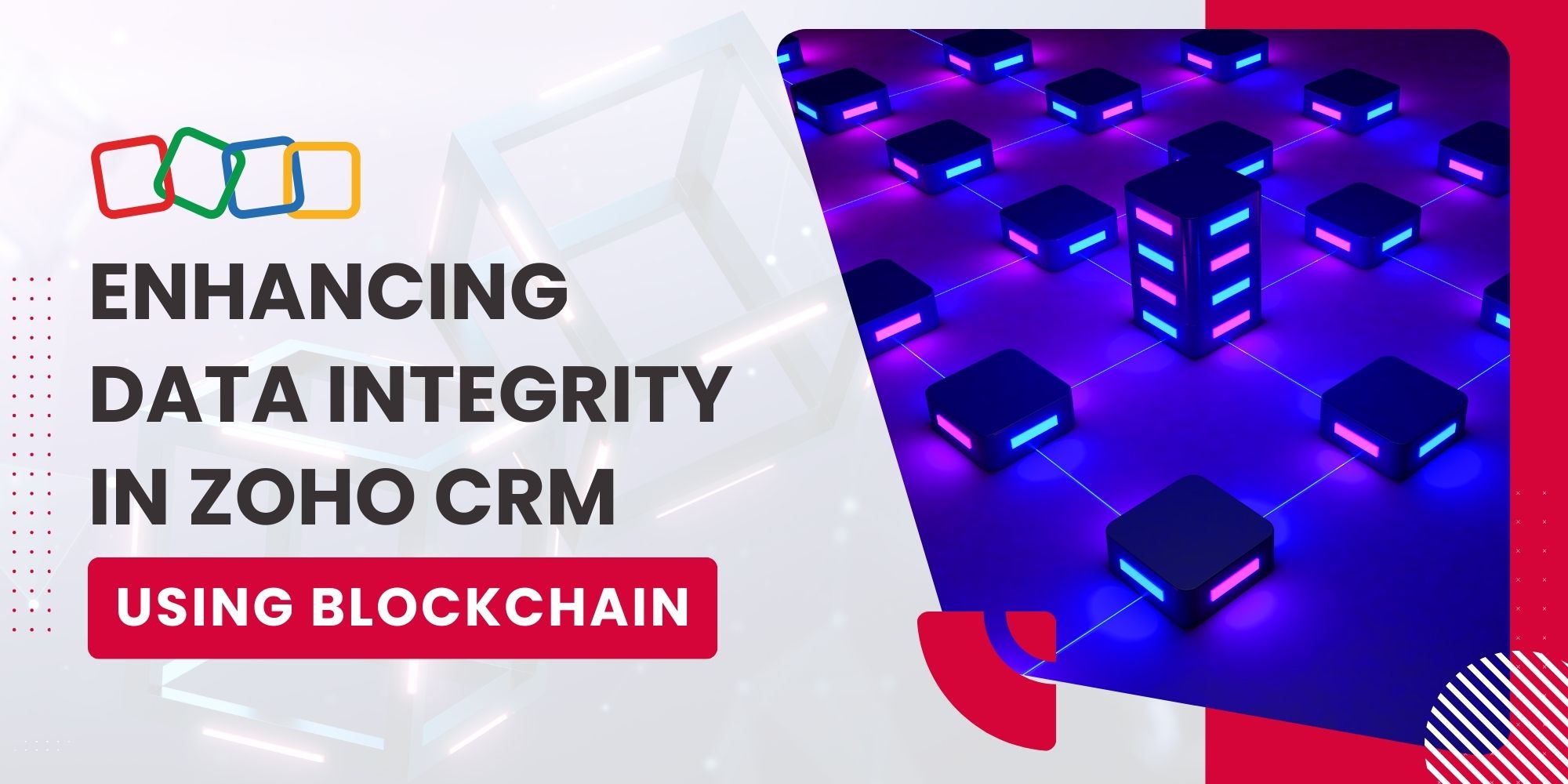
Blockchain can revolutionize Zoho CRM by ensuring data integrity, preventing fraud, enhancing security, and providing a transparent audit trail. While integration challenges exist, the benefits far outweigh the risks, making blockchain a promising solution for CRM data management.
Hi everyone! Welcome! Grab your favorite drink and get comfortable because today, we’re diving into an exciting topic—how blockchain technology can enhance data integrity in Zoho CRM. With businesses relying heavily on customer data for decision-making, ensuring the accuracy, security, and immutability of that data is more critical than ever. Let’s explore how blockchain can revolutionize data integrity in Zoho CRM. And if you’re short on time, check out the summary at the end!
Why Data Integrity Matters in CRM
Customer Relationship Management (CRM) systems like Zoho CRM are essential for businesses to track customer interactions, manage sales pipelines, and optimize marketing strategies. However, with increasing data breaches, fraud, and unauthorized alterations, ensuring the reliability of customer data is a growing challenge.
Poor data integrity can lead to:
- Inaccurate customer insights – Misleading data results in flawed business decisions.
- Compliance risks – Many industries require strict data security and audit trails.
- Customer distrust – Data manipulation or breaches can erode trust and damage brand reputation.
This is where blockchain technology can play a game-changing role.
What is Blockchain and How Does It Work?
Blockchain is a decentralized, distributed ledger technology that records transactions securely and transparently. Each data entry is stored in a block and linked to the previous one, forming a chain. Once recorded, the data is immutable—meaning it cannot be altered or deleted without network consensus.
Key features of blockchain include:
- Transparency – Every transaction is recorded and visible to authorized participants.
- Immutability – Data, once written, cannot be changed, ensuring integrity.
- Decentralization – No single entity controls the database, reducing the risk of manipulation.
- Security – Cryptographic encryption protects against unauthorized access and fraud.
By integrating blockchain with Zoho CRM, businesses can enhance the accuracy, security, and reliability of their customer data.
How Blockchain Can Improve Data Integrity in Zoho CRM
Preventing Data Tampering
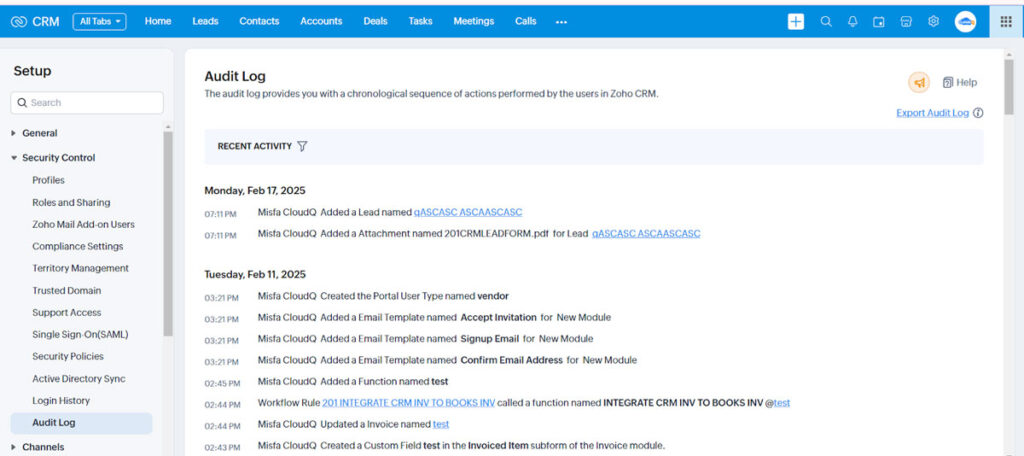
One of the biggest concerns in CRM systems is unauthorized data modification. Blockchain ensures that every change made in Zoho CRM is recorded in a tamper-proof ledger. If any unauthorized alterations occur, the system can detect them instantly.
Here’s an overview of the Audit Log feature in Zoho CRM, which records all modifications made to data. This supports the idea that blockchain can enhance transparency by tracking every change and preventing unauthorized modifications.
Strengthening Data Security
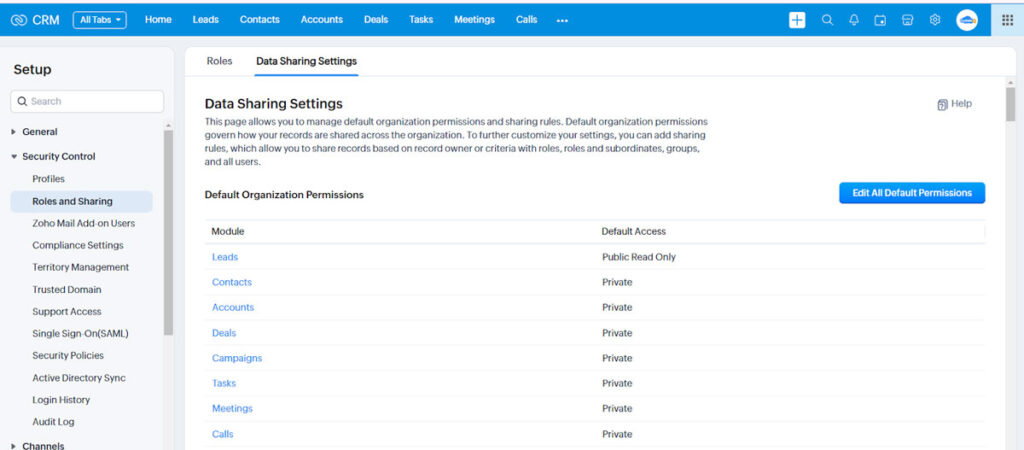
With blockchain, sensitive customer data stored in Zoho CRM is encrypted and accessible only to authorized personnel. This reduces the risk of cyberattacks and data breaches.
Below, you see an example of how Zoho CRM encrypts customer data, highlighting the security measures in place to protect sensitive information. This directly supports the discussion on enhancing security through blockchain.
Creating a Transparent Audit Trail
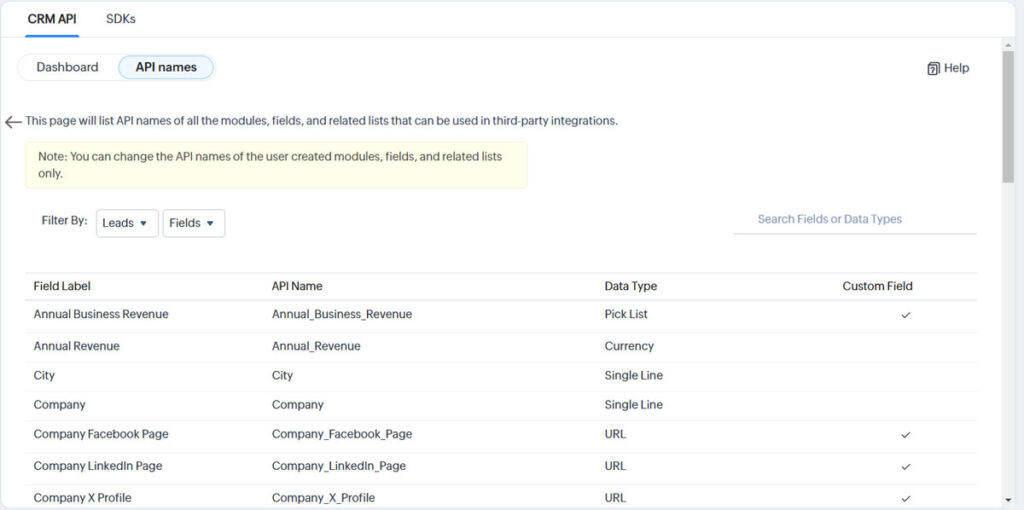
Blockchain automatically maintains a historical record of all changes, making audits seamless. Businesses can verify every transaction, customer update, or deal modification, ensuring compliance with regulatory requirements.
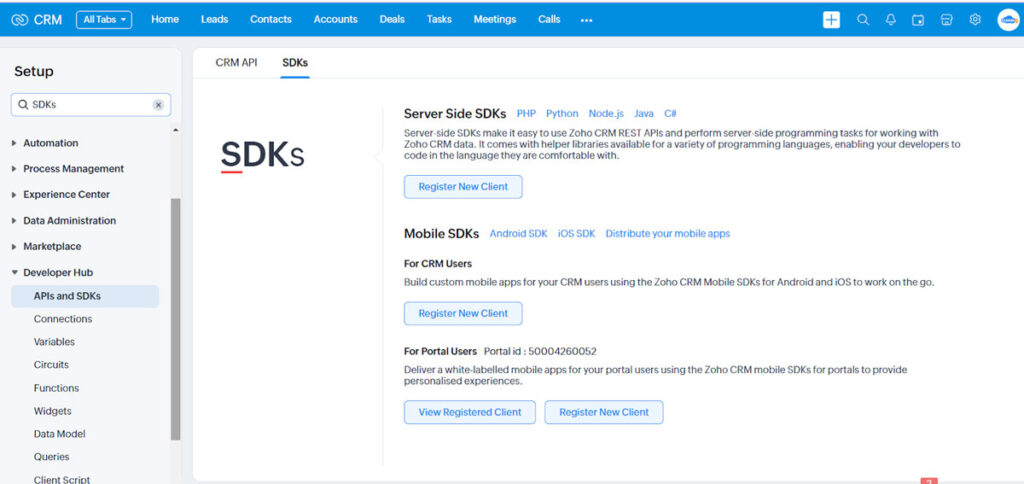
Now we see, not only how the API documentation for fetching Zoho CRM records looks, but also how it retrieves data. This illustrates how businesses can retrieve historical data for auditing purposes, ensuring compliance and transparency.
Improving Customer Trust
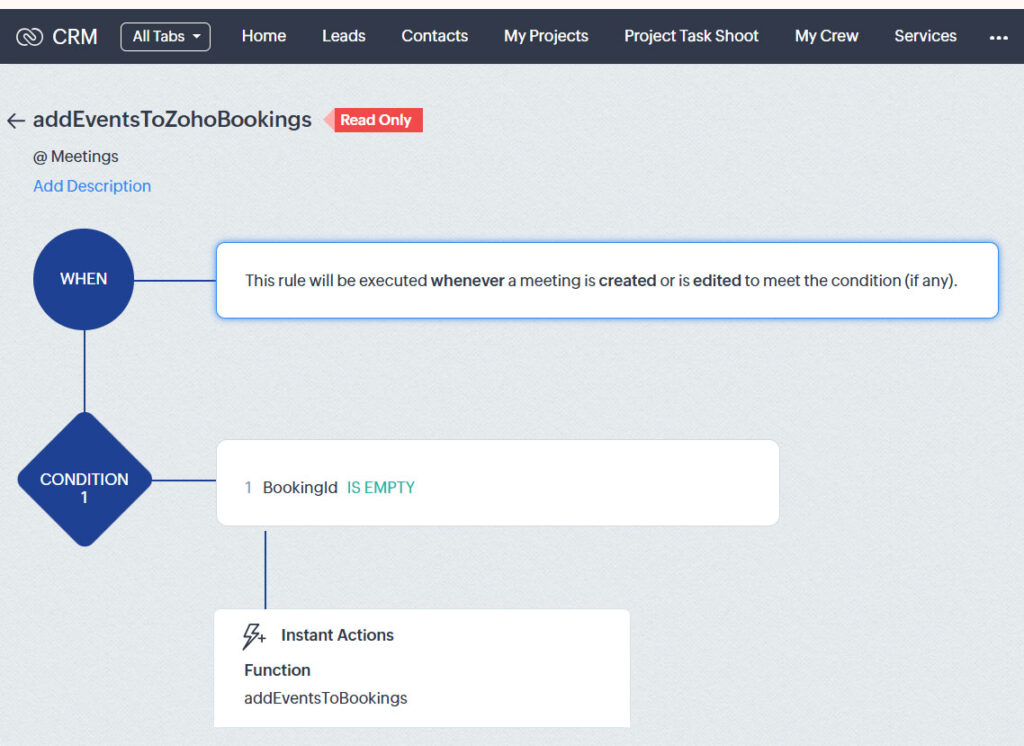
Customers are becoming more conscious about how businesses handle their data. By leveraging blockchain, businesses can provide proof of data authenticity and security, boosting customer confidence.
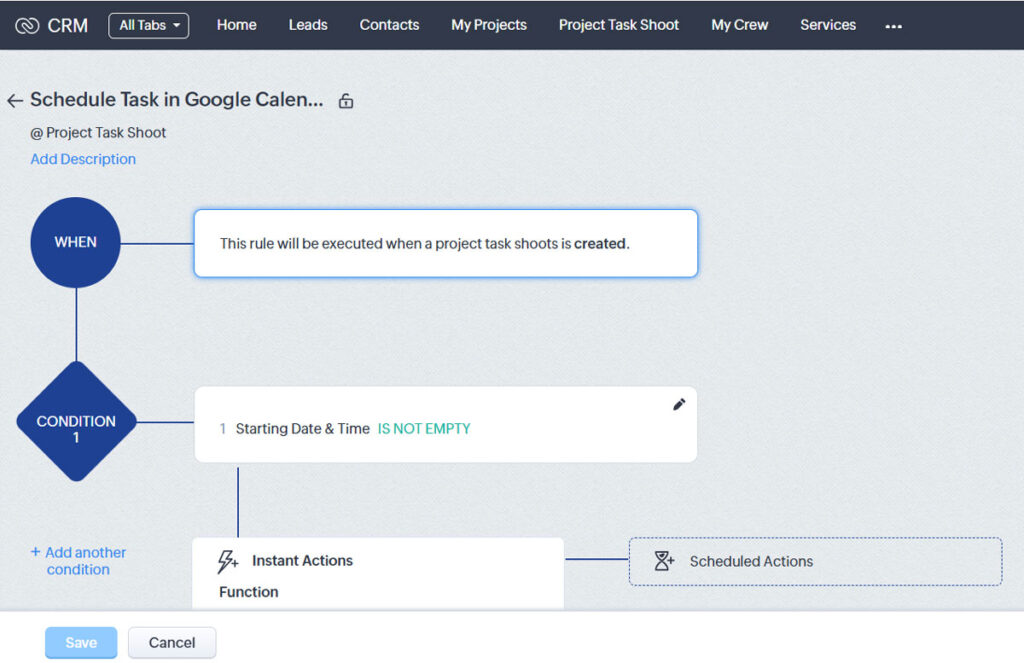
Below are examples of setting up a workflow that logs data changes to an external blockchain service. This demonstrates how businesses can ensure data transparency and build trust by providing an immutable record of changes.
Reducing Fraud and Duplicate Data
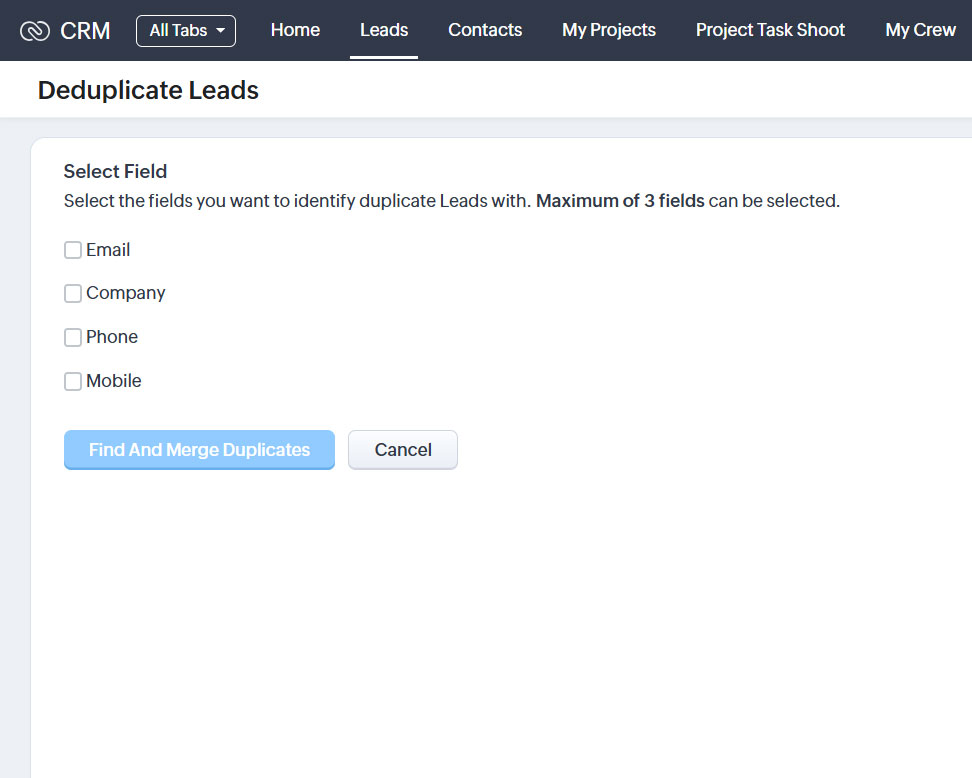
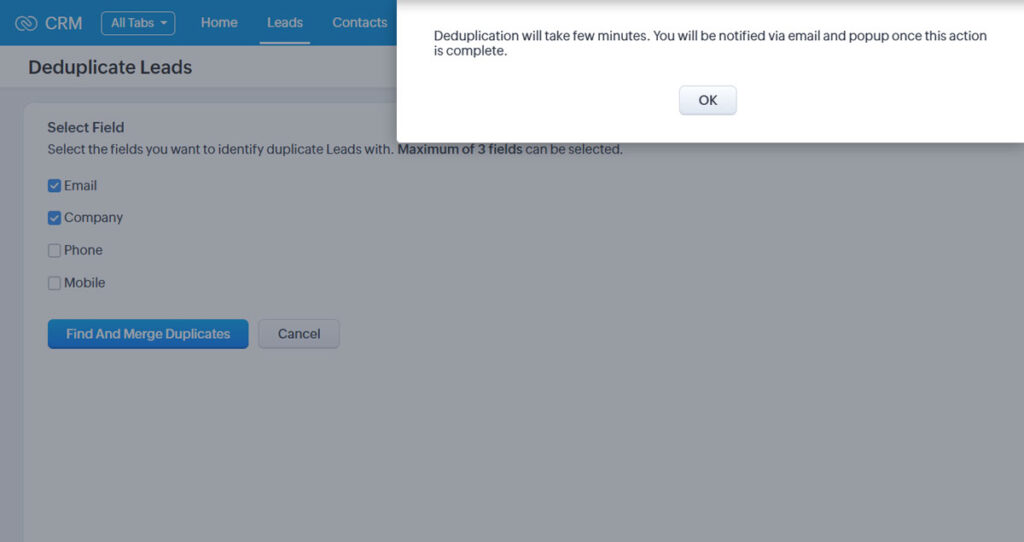
Duplicate or fraudulent data entries in CRM systems can cause operational inefficiencies. Blockchain eliminates this issue by ensuring every entry is validated and authenticated before being recorded.
The image below shows how Zoho CRM detects and merges duplicate records. This aligns with the discussion on preventing data duplication and fraud, ensuring data integrity through blockchain validation.
Challenges of Implementing Blockchain in Zoho CRM
While the advantages are significant, there are challenges to consider:
- Integration Complexity – Blockchain is still relatively new in CRM applications, requiring technical expertise for smooth implementation.
- Cost Considerations – Setting up blockchain infrastructure can be expensive, especially for small businesses.
- Scalability Issues – Some blockchain solutions face speed and storage limitations when handling large volumes of CRM data.
Despite these challenges, businesses that adopt blockchain for CRM data integrity will gain a competitive edge in the long run.
The Future of Blockchain in Zoho CRM
Zoho has been actively evolving its CRM solutions with AI and automation. As blockchain adoption grows, we may soon see native blockchain integration in Zoho CRM for improved security, data accuracy, and compliance.
Businesses dealing with sensitive customer data, regulatory requirements, or frequent data integrity challenges should consider exploring blockchain-powered CRM solutions to future-proof their operations.
Hope you enjoyed this post! While you’re here, and in a reading mood, why not check out a few of our other pieces? We have several blog posts on Cloud Technologies, Salesforce CRM, AI, Salesforce CPQ, Zoho, Bitcoin, Cybersecurity, AWS, and many other topics that we just know you’ll love. Browse the topics here.
Contributor